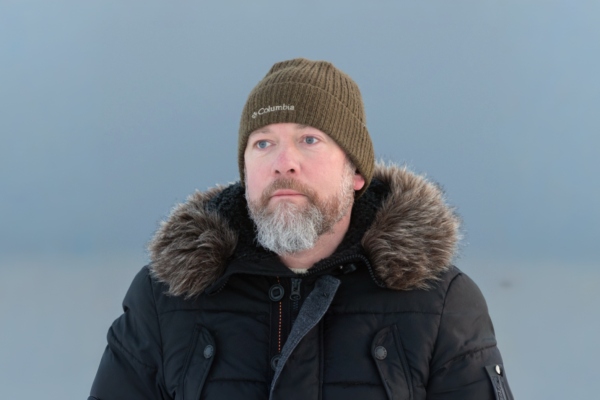
Allan Andersen
1. Congratulations on winning in the New York Photography Awards! Can you share a little about yourself, what inspired you to pursue photography, and how has your journey evolved since your first shot?
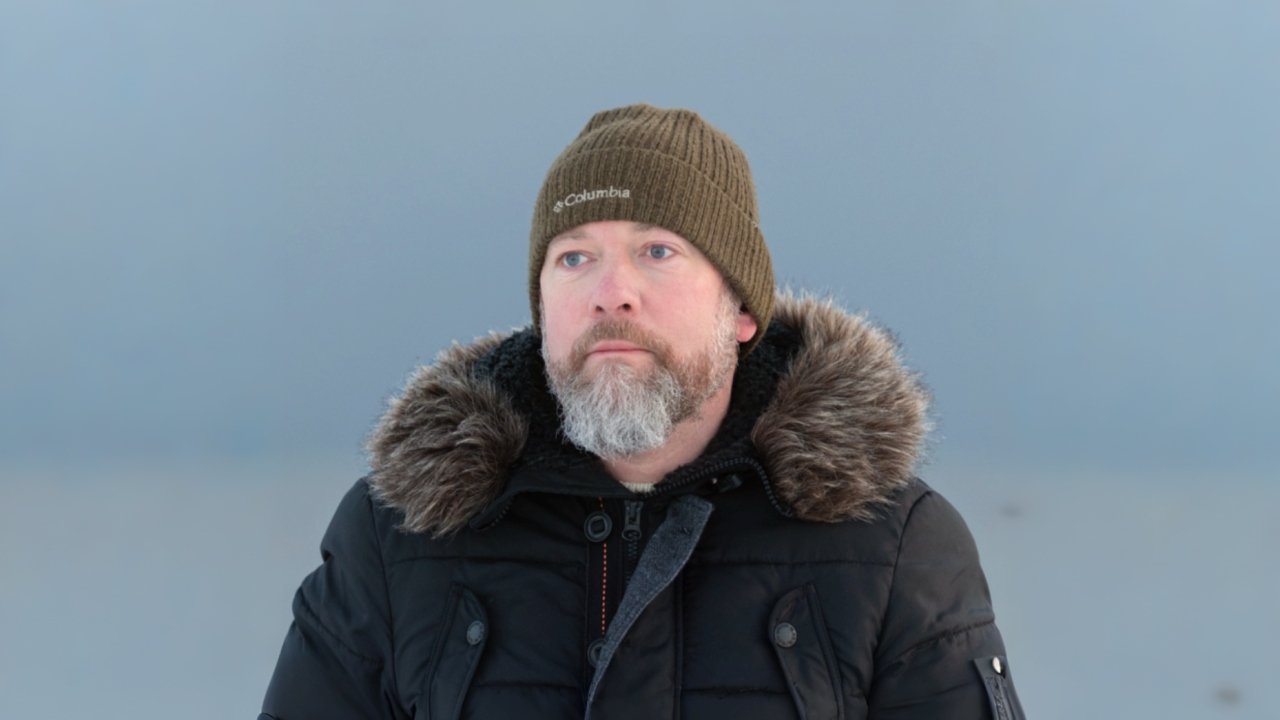
I live in Denmark, close to Mariager Fjord along the Kattegat coast – a landscape that has become the foundation of my work and a recurring subject in my photography.
Photography began as a way for me to find calm and spend meaningful time alone. That connection to nature still defines my work today.
Although I have always been interested in photography, I only began pursuing it seriously about two years ago. Since then, my development has been quite rapid. In the beginning, I explored everything – different subjects, light, and lenses.
The most important shift has been moving from capturing what I see to creating the images I have in mind. Today, I work with a clear intention, where light, weather, and atmosphere are essential elements. That understanding has shaped my approach to creating images that are both minimal and timeless.
2. Can you share the story or inspiration behind your award-winning piece? How does winning this award make you feel about your journey in photography?
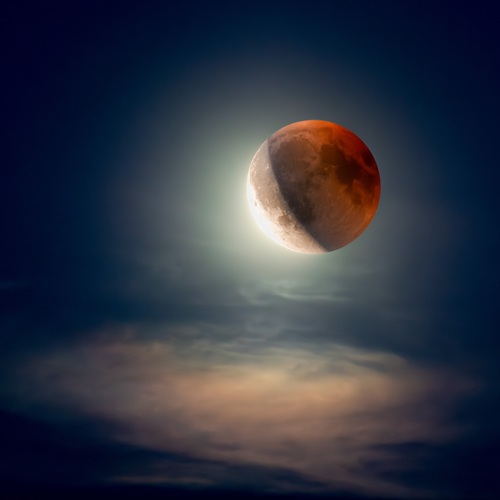
I had planned to photograph the lunar eclipse from a hill near the church in Als, a location that usually offers a clear view above the coastline.
That evening, the conditions were far from ideal. Strong winds and low clouds covered the horizon, and for a long time, the moon was completely hidden. The full eclipse had already passed, and most people had given up and left.
But I chose to stay.
Eventually, the moon broke through the clouds, and for a brief moment, part of it still carried the deep red tones from the eclipse. That was the moment I had been waiting for.
For me, the image is about patience and persistence. It reflects an important part of my process – adapting to the conditions and trusting that something unique can still emerge. Often, those moments lead to the most meaningful photographs.
3. How do you decide which photo to submit for a competition?
I start by choosing the images that resonate most with me personally. Those are usually the ones I can return to again and again without losing interest.
I also value feedback from others, as it helps me understand how the image is perceived. However, my own judgment is always the deciding factor.
Technical quality is equally important. The balance between composition, light, and detail needs to be right. Finally, I consider which category the image fits best in.
In the end, I look for images that combine personal meaning, technical precision, and a strong visual presence.
4. What first made you pick up a camera?
I was fascinated by the idea of freezing a moment in time – taking something fleeting and making it last. That ability to preserve not just what something looked like, but how it felt, is what first drew me to photography.
5. What’s your favorite type of photography, and why do you love it?
I am drawn to images where the idea is clear and intentional. Whether it is a subject, a scene, or a mood, there needs to be a defined thought behind the photograph.
Equally important is the light. It has to add something – depth, atmosphere, or tension.
What I appreciate most is that this kind of photography reveals something about the person behind the camera. When there is intention, there is also personality.
6. What’s your go-to camera setup, and why does it work best for your projects? What’s your favorite feature?
I do not have a fixed setup, as it depends on what I want to photograph.
I work with a Nikon D850 and primarily use prime lenses. My focal range typically goes from 14mm up to 500mm. The award-winning image was captured with a 500mm f/4 lens.
What matters most to me is the character of the lens. I am less interested in perfectly neutral rendering and more drawn to lenses that give a sense of depth, especially in how they handle light and highlights.
7. If someone looked at your work, what’s the one thing you’d want them to feel?
I aim to create images that balance calm and beauty, while still leaving room for curiosity and reflection.
More than anything, I want to convey a quiet moment – a sense of stillness. If someone feels a little more present and grounded when looking at my work, then the image has achieved its purpose.
8. What was the most challenging part of capturing your winning shot?
Definitely the wind. It was strong enough to shake the camera, which made it especially challenging with a 500mm lens.
At that focal length, even the smallest movement matters. At the same time, I had to balance the exposure between the moon and the clouds to preserve both detail and color.
It required both technical control and careful timing.
9. Is there a specific place or subject that inspires you the most?
I feel a strong connection to the sea and Mariager Fjord, especially a place called Als Odde.
The light there can be very special. Surrounded by water on both sides, it creates unique conditions where the landscape feels open and constantly changing. On calm days, the shallow water reflects the sky like a mirror.
I also find inspiration in Lille Vildmose, which offers a more raw and untamed atmosphere. The contrast between these places allows me to explore different expressions.
What inspires me most is the combination of light, simplicity, and variation.
10. Who or what has been your biggest influence in photography?
One of my early influences was a classic image by Ansel Adams. His use of light and shadow made a strong impression on me.
However, the greatest influence on my work has been Michael Freeman’s book The Photographer’s Eye. It gave me the tools to better understand composition and to develop my own way of seeing.
That shift has been essential in shaping how I approach photography today.
11. What message would you share to inspire photographers to participate in photography awards, and what advice would you give to help them excel in the competition?
I would advise photographers to give themselves time before entering competitions, allowing their style to develop naturally.
Self-criticism is also important. Asking yourself, “Would I vote for this image?” can be a useful guideline.
It is equally important to choose competitions that align with your work. Looking at previous winners can help identify what is being rewarded.
12. What’s one piece of advice for someone just starting in photography?
Before taking a photo, think about what matters most in the scene and what you want to bring out.
Shoot with intention and practice that approach consistently.
I would also recommend studying photography through books that focus on ideas, visual language, and different ways of seeing. Technical skills will come with time, but a clear vision is what truly shapes your work.
13. What role do editing and post-processing play in your creative workflow?
I always shoot in RAW and aim to avoid overexposure to preserve as much information as possible.
In editing, I mainly use selective adjustments to guide attention and shape the light. I prefer a natural look and avoid heavy color manipulation.
In my winning image, I used exposure stacking to balance the brightness of the moon and the clouds. Understanding these techniques expands your creative possibilities.
I see editing as part of the creative process, but I rely less on it now than before, aiming to get as much as possible right in-camera.
14. How do you see technology, like AI, influencing the future of photography and your own approach?
For me, photography is closely connected to the experience of being present in nature. That is something AI cannot replace.
In editing, however, AI is a useful tool. It can make certain tasks faster and more precise.
I see it as support rather than something that defines the process. The key elements – observation, timing, and intention – remain unchanged.
15. If you could photograph anything or anyone in the world, what would it be?
If I had to choose, it would be places defined by exceptional light.
The far north of Norway, Iceland, and New Zealand are all high on my list. Snowdonia in Wales is another place I would like to explore.
At the same time, I am drawn to returning to Palermo to work more with street photography, as it offers a completely different kind of visual energy.
In the end, it is not a specific subject that matters most to me, but the presence of light and atmosphere.